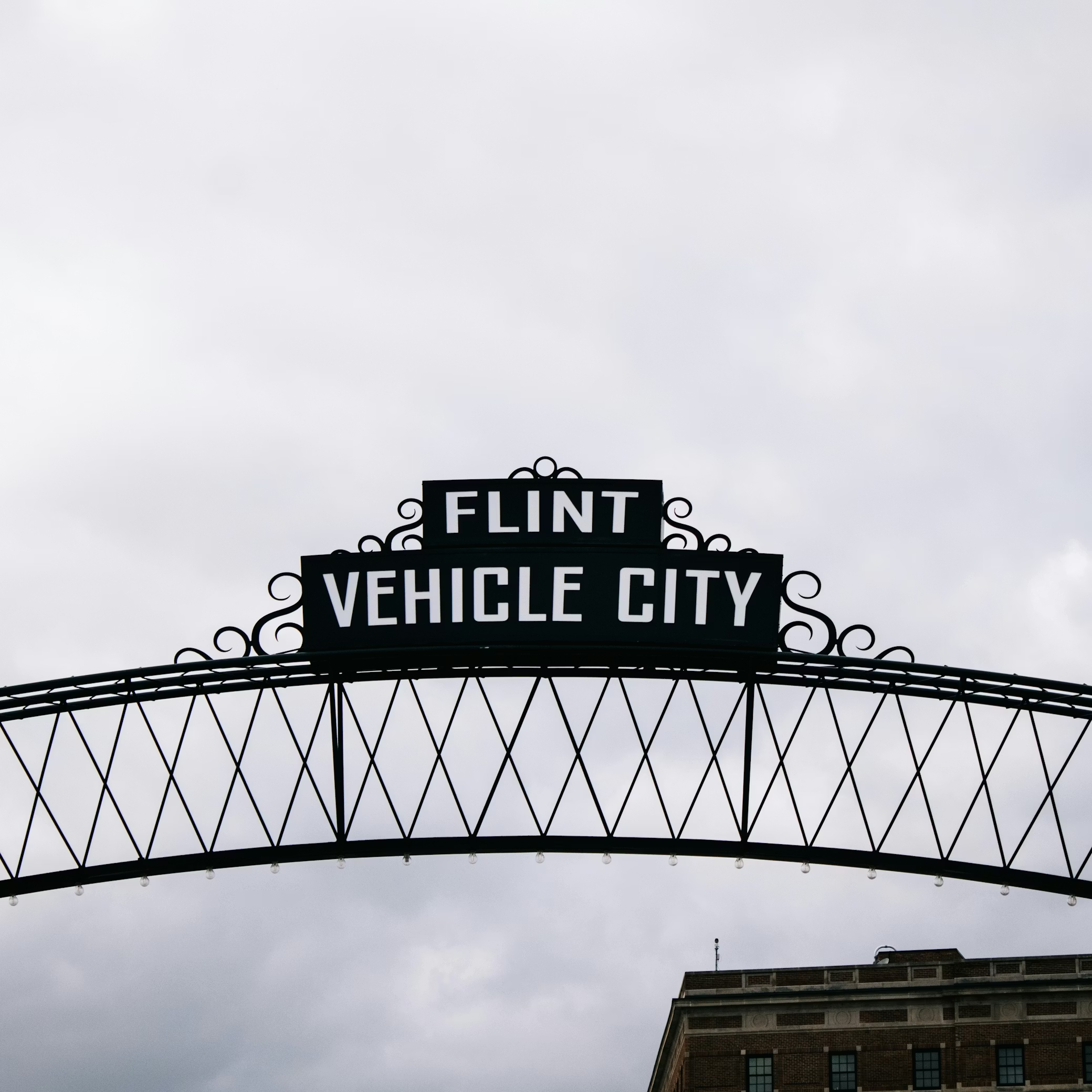
The narrative most people carry about Flint's water is about a decade old. It's accurate for what happened in 2014–2016 — but it's not accurate for 2026, and residents and researchers are actively pushing back against the idea that Flint's water is still in crisis.
The honest picture is more nuanced in both directions: meaningfully better than most people think, but not entirely resolved.
What Happened: The Brief Version
In April 2014, Flint switched its municipal water source from Detroit's system (Lake Huron) to the Flint River as a cost-saving measure. The Flint River water was more corrosive than the previous supply, and — critically — officials failed to require corrosion control treatment. Without that treatment, lead from aging service lines leached into the water at dangerous levels.
Lead levels at some residential properties reached 13,000 ppb during the crisis — the EPA threshold for hazardous waste is 5,000 ppb. The federal action level for drinking water is 15 ppb. Children across the city were exposed to lead during a period when the state government repeatedly dismissed and delayed in response to residents' concerns.
Flint switched back to Detroit's supply in October 2015. The criminal and civil accountability proceedings that followed involved 15 cases, $641 million in settlements, and criminal charges against nine former officials (though only one minor conviction was obtained). An estimated 9,000 Flint children experienced health effects from the crisis.
What's Happened Since: The Recovery
The recovery has been extensive, federally supervised, and — in the end — largely successful on the infrastructure side:
Water source. Flint now gets its water from the Great Lakes Water Authority, sourced from Lake Huron — the same high-quality source it used before the crisis, under a 30-year contract.
Lead service line replacement. Under a 2017 federal settlement with NRDC and the Concerned Pastors for Social Action, Flint committed to excavating and checking more than 31,500 properties and replacing all lead and galvanized steel service lines. The final pipes under that agreement were replaced on July 1, 2025 — 11 years after the crisis began.
More than 28,000 properties were excavated. Nearly 11,000 lead lines were replaced. About 500 lines that were either declined by residents or discovered in later inventory work remain to be replaced; that work is expected to resume in spring 2026.
Lead testing results. Since July 2016 — less than two years after the crisis peak — Flint's water has been in continuous compliance with both federal and Michigan lead standards. The most recent six-month monitoring period (July–December 2025) showed a 90th percentile result of 6 ppb — well below both the federal 15 ppb action level and Michigan's stricter 12 ppb standard. This is now Flint's 10th consecutive year of compliance, announced by Michigan's EGLE in February 2026.
EPA emergency order. Lifted in May 2025, after Flint met all requirements under the Safe Drinking Water Act emergency order that had been in place since January 2016.
Corrosion control. The treatment that was missing in 2014 is now in place and working. Flint's water is currently treated with orthophosphate, which coats the interior of pipes and prevents lead leaching. This was the key systemic fix alongside the pipe replacement.
Infrastructure upgrades. Beyond service lines, Flint has replaced all household water meters citywide, rehabilitated water storage tanks, replaced aging distribution mains, and established a secondary water connection for emergency backup supply.
Total investment. Michigan committed more than $350 million to Flint, with an additional ~$100 million from the federal government, covering water quality improvements, pipe replacement, healthcare, food resources, education, and job training.
What Still Isn't Resolved
The ~500 remaining lines. As of early 2026, roughly 500 service lines still need replacement — either because residents declined access or because they were identified in later inventory work. Work resumes spring 2026. Until those lines are replaced, those specific properties retain elevated risk.
Interior plumbing. Service line replacement eliminated the main pathway for lead contamination — but older homes may still have lead solder at pipe joints, lead-containing fixtures, or galvanized steel interior pipes that can trap lead particles. This is not unique to Flint; it's true of any pre-1986 home in the US. The service line is the city's responsibility; what's inside your building is not.
Free filters end March 2026. Under the NRDC settlement, the state was required to provide free water filter units and replacement cartridges to residents until March 2026. After that date, residents who want to continue filtering will need to obtain their own. Free test kits and filters are currently still available at Flint City Hall (Monday–Friday, 8am–4pm) through that deadline.
The trust deficit. Perhaps the most durable legacy of the crisis is that many Flint residents still don't trust the tap water, even with a decade of clean test results and a fully replaced service line. This is rational — they were told the water was safe in 2014–2015 when it wasn't, repeatedly and by multiple levels of government. Rebuilding that trust takes longer than replacing pipes.
Structural financial challenges. Flint's population dropped nearly 20% since the water crisis began, meaning fewer ratepayers to share the cost of maintaining the water system. Many residents are behind on water bills. Funding the ongoing operation and maintenance of a newly rebuilt water system with a shrinking, economically stressed population is an unsolved long-term challenge.
Is Flint Tap Water Safe to Drink Now?
Based on the evidence: yes, for most residents, the water currently meets all applicable standards and tests substantially cleaner than the crisis years. EGLE, EPA, Michigan Public Radio, and independent environmental groups have all confirmed the current test results.
EGLE director Eric Oswald noted in 2025 that lead exceedances do still appear at some non-residential locations — specifically churches and businesses that don't circulate water regularly. Stagnant water in older plumbing leaches more lead. This is why regular flushing matters.
For residents who still want to filter: That's a reasonable choice, and there's no harm in it. A filter certified to NSF/ANSI Standard 53 for lead reduction provides an additional layer of protection against residual risk from interior plumbing, even with lead-free service lines.
What Filter Makes Sense in Flint in 2026
The risk profile has shifted. In 2019, the service lines were the primary concern — and a filter at the tap was critical. Now the service lines are replaced for most residents, and the remaining risk is interior plumbing and occasional system upsets.
For residents who want continued protection:
- Clearly Filtered Pitcher (~$90) — NSF certified for lead, PFAS, and 360+ contaminants; the most capable pitcher option
- PUR PLUS Faucet Filter (~$35) — NSF 53 certified for lead; inexpensive and easy to install
- APEC ROES-50 Under-Sink RO (~$215) — comprehensive coverage for residents who want maximum assurance
Reminder on free filters: Flint City Hall continues to distribute free NSF 53-certified filter pitchers and replacement cartridges through March 2026. Take advantage of this before the program ends.
→ Enter your Flint ZIP at PureCity to see current water quality data for your neighborhood.
What Flint Means for the Broader US
Flint changed federal water policy. The experience directly influenced the 2021 Lead and Copper Rule Revisions, which now require utilities to inventory their service lines, notify residents with lead service lines, and replace lines more aggressively.
It also demonstrated that aggressive remediation — while expensive and slow — can work. Flint's 90th percentile lead level was 3–6 ppb in recent testing; many cities with no crisis history are testing higher than that. The crisis was a failure of governance, not a permanent condition of the water.
The $600+ million in settlements is still being distributed. About 26,000 people are expected to receive payments; amounts are unclear and many feel the compensation cannot adequately account for what the crisis cost children in developmental terms.
Related Articles
- Does Your Water Filter Actually Remove Lead? What Brita Won't Tell You
- Chicago Water Quality 2026: The Lead Pipe Problem Most Residents Don't Know About
- Newark, NJ Water Quality 2026: How the Lead Crisis Unfolded, What Changed, and What Residents Still Need to Know
Sources: Michigan EGLE: Flint Water Enters 10th Year of Compliance, February 2026 · Michigan EGLE Flint Water · NRDC: We Must Keep Protecting Ourselves from Flint's Aging Water System, December 2025 · Michigan Public Radio: A Hard-Fought Milestone for Flint's Water, June 2025 · CNN: Flint Declares Water Safe After Replacing Lead Pipes, August 2025 · NSF Certified Products Database