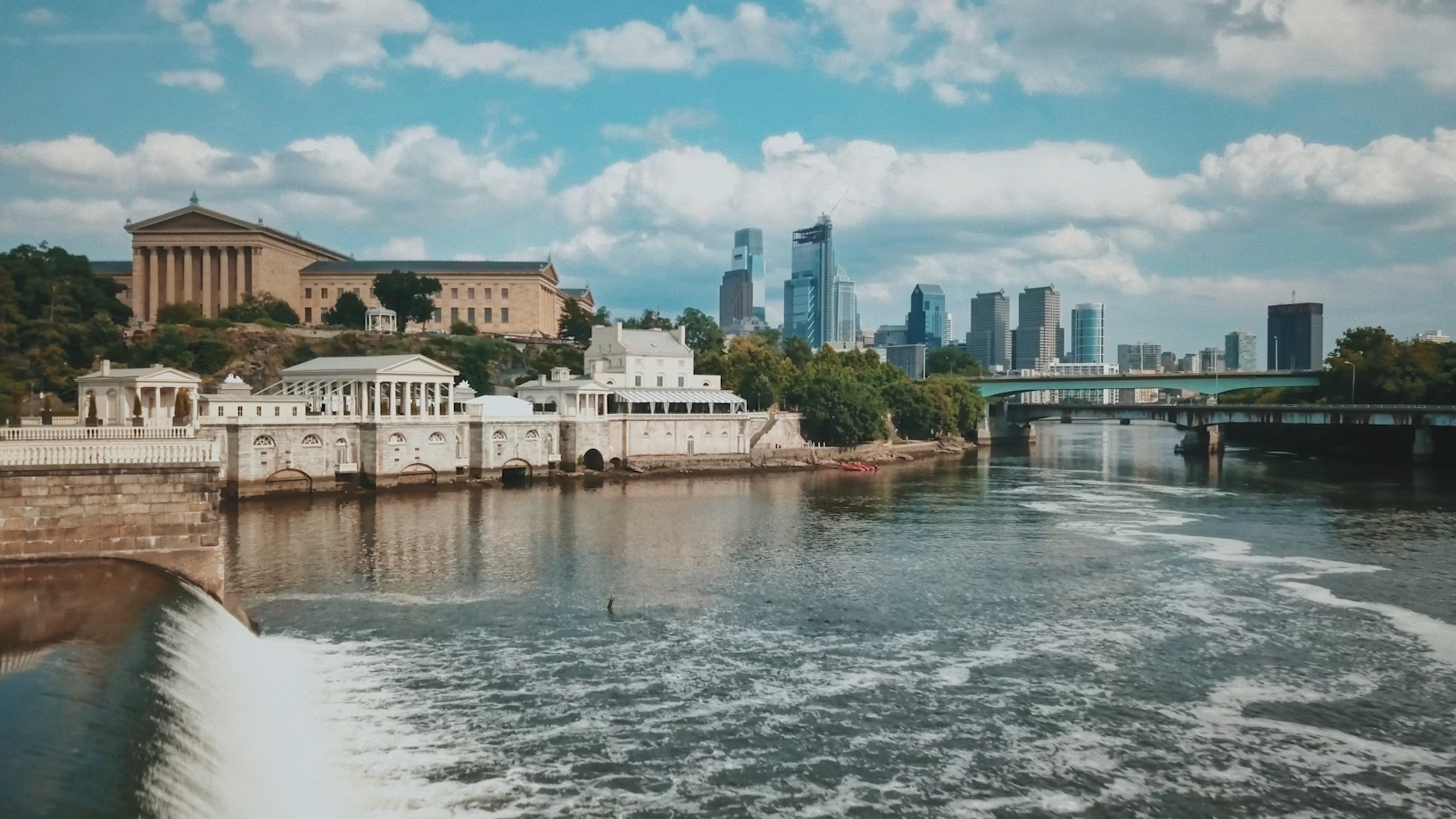
Philadelphia gets its drinking water from two rivers: the Delaware River (via the Baxter treatment plant) and the Schuylkill River (via the Queen Lane and Belmont plants). The Philadelphia Water Department serves approximately 1.6 million residents — one of the largest water systems in the Northeast — and its source water protection program, which coordinates with utilities across the entire Delaware River watershed from upstate New York to Delaware Bay, is among the more sophisticated in the country.
Philadelphia's 2024 Water Quality Report states the city's treated water is top-quality and meets all federal and state standards. The honest picture of what's in your water, and what challenges remain, involves two main threads: lead from aging plumbing infrastructure, and PFAS that PWD is actively working to treat but hasn't yet resolved.
Lead: The Scale of the Problem
Lead doesn't enter Philadelphia's water at the source or in treatment. The Delaware and Schuylkill Rivers don't contain lead. Treatment plants don't add it. The problem is the distribution system — specifically, lead service lines connecting homes to the water main, and lead solder and fixtures inside pre-1986 homes.
The service line inventory challenge: Philadelphia Water Department sent approximately 360,000 property owners notification letters in early December 2025 as part of the annual Lead and Copper Rule Improvements (LCRI) mandate. These letters summarize PWD's current records for the material of each property's service line — the pipe connecting the building to the city's water mains.
The complexity: residential service lines in Philadelphia are customer-owned. PWD is responsible for the main; you own the pipe from the curb stop to your meter. PWD updated its notification approach in 2025 — replacing the ambiguous phrase "Unknown Material" with "Incomplete Records" to better communicate genuine uncertainty about many lines.
The replacement challenge — and the funding gap: PWD has estimated that full lead service line replacement under the LCRI's 10-year mandate would cost approximately $500 million. The city received $35 million from the Biden Infrastructure Law — about 7% of the estimated cost. In comments to EPA, PWD stated frankly that the 10-year replacement timeline "is not feasible due to financial concerns, limited resources, and competing regulatory priorities."
The first pilot replacement program will focus on North and West Philadelphia, with approximately 1,000 lead service lines budgeted for replacement beginning in 2026.
What this means for residents: Philadelphia has an older housing stock concentrated in rowhouse neighborhoods built in the late 19th and early 20th centuries — Northern Liberties, Kensington, Frankford, West Philadelphia, South Philadelphia, Germantown. Homes built before 1986 with original plumbing may have lead service lines and/or lead solder at fixture connections. The city's corrosion control program (orthophosphate dosing) reduces lead leaching significantly — but it doesn't eliminate risk, and it doesn't help if your service line itself is lead.
PWD's corrosion control appears to be working: the department conducted new tap sampling rounds in Summer 2025 and reported its corrosion control process is effectively reducing lead risks. Philadelphia's 90th percentile lead level is well below the federal action level of 15 ppb. But the EPA and CDC are clear: there is no safe level of lead exposure for children. Corrosion control reduces risk; it doesn't eliminate it where lead pipes are present.
If you're in a pre-1986 Philadelphia home: Use the Service Line Material Map at water.phila.gov/service-line-map to check PWD's records for your address. If your line is confirmed or suspected lead, an NSF 53 certified filter at the kitchen faucet is essential — particularly if children or pregnant women are in the household. Don't flush your pipes before getting the tap water tested if you want to know your actual exposure level (follow PWD's specific testing protocol instead).
→ Check your Philadelphia ZIP code at PureCity
PFAS: Delaware River Contamination and Treatment Upgrades in Progress
PFAS have been detected in both the Delaware River and the Schuylkill River — Philadelphia's source waters. PWD's own PFAS page is direct about this: PFAS have been detected in both groundwater and surface water supplying drinking water for millions of people in the region, and there are still many commercial and industrial sources that need to be evaluated.
Current status: PWD has been monitoring PFAS for years and testing treated water levels. The 2024 Drinking Water Quality Report states PWD is "planning major upgrades for PFAS at our treatment plants and preparing to meet updated regulatory limits." The city is currently testing advanced treatment methods at its plants.
The regulatory timeline: Pennsylvania has its own PFAS drinking water standards for PFOS and PFOA. The EPA's new federal MCLs (4 ppt for PFOA/PFOS) apply under the 2031 compliance deadline (extended from 2029 in May 2025). PWD states it must be ready to meet even stricter limits as regulations evolve.
Regional context: The Delaware River watershed is a long river with significant industrial and population density from upstate New York through New Jersey and Pennsylvania. PFAS sources throughout the watershed include former industrial sites, airports, fire training facilities, and military installations. The Delaware River Basin Commission (DRBC) in 2024 formally convened a Source Water Protection subcommittee — PWD holds a reserved member position — to coordinate watershed-wide contamination monitoring and response. PWD also owns and operates the Delaware Valley Early Warning System for coordinating spill response among downstream utilities.
Southeastern Pennsylvania context: PFAS contamination in southeastern Pennsylvania is severe in some areas — some communities have PFAS levels up to 15 times the federal limit, according to published reporting. Philadelphia's own treated water is being managed toward compliance, but the regional groundwater and source water contamination reflects decades of industrial use throughout the watershed.
The Schuylkill River: Agricultural and Industrial Runoff
The Schuylkill River watershed — which feeds the Queen Lane and Belmont treatment plants — includes significant agricultural land and former industrial areas in the Philadelphia suburbs. PWD contributes annually to the Schuylkill River Restoration Fund (increased to $250,000 beginning in 2024) specifically to fund watershed protection projects on agricultural properties, reflecting concern about runoff entering the river.
The river has elevated organic matter loads that drive disinfection byproduct formation during treatment. DBPs (TTHMs and HAA5) are detected in Philadelphia's finished water — levels are within federal MCLs but above EWG's more conservative health guidelines.
Cryptosporidium and UV Treatment
PWD is implementing UV treatment at all three of its drinking water treatment plants — partly to address Cryptosporidium, a chlorine-resistant protozoan that can cause serious gastrointestinal illness. The Delaware River is specifically flagged as a Cryptosporidium concern in PWD's watershed control plan. UV treatment is one of the most effective Cryptosporidium controls and is a significant upgrade to the system.
This isn't a current emergency — PWD treats aggressively — but it reflects the nature of the source water and why Philadelphia's treatment infrastructure investment is ongoing.
The Water Revitalization Plan
PWD is executing a decades-long Water Revitalization Plan that reviews all drinking water treatment, pumping, distribution, and supply infrastructure. Many current buildings at Philadelphia's treatment plants date to the 1950s and 1960s. The plan is designed to address PFAS treatment, LCRI lead line replacement, UV implementation, and long-term system resiliency.
This is a large, complex capital program competing for funding in a city that also has significant other infrastructure needs. Rate increases to fund the Revitalization Plan are anticipated.
Filter Recommendations for Philadelphia
Pre-1986 home, lead concern (highest priority):
- Frizzlife SK99 Under-Sink Filter (~$90) — NSF 42+53 certified; reduces lead to below detection; installs under kitchen sink; best value NSF 53 option for lead reduction
- PUR PLUS Faucet Filter (~$35) — NSF 53 certified for lead reduction; easiest install; note: not compatible with pull-out or sprayer faucets
- Clearly Filtered Pitcher (~$90) — NSF certified for lead, PFAS, chloramine, DBPs, and 360+ contaminants; best pitcher option for comprehensive coverage
PFAS concern (now or in anticipation of treatment gaps):
- APEC ROES-50 (~$215) — under-sink RO; removes PFAS, lead, DBPs, radium in one system; most comprehensive option
- Bluevua RO100ROPOT-LITE Countertop RO (~$299) — countertop RO for renters; NSF certified for PFAS, lead, and DBPs
Newer home, lead not a concern, mainly taste/DBPs:
- Brita Everyday Elite (~$41) — NSF 53 certified (blue filter only, not white); handles chlorine, some DBPs, and lead; lower cost entry point
Resources
- Philadelphia Water Department quality reports: water.phila.gov
- Service Line Material Map: water.phila.gov/service-line-map
- PFAS management: water.phila.gov/sustainability/watershed-protection/pfas
- Lead testing request: water.phila.gov/lead
Related Articles
- Lead in Drinking Water: What Every Homeowner and Renter Needs to Know
- PFAS in Drinking Water: What It Is, Where It's Found, and How to Filter It
- Disinfection Byproducts in Drinking Water: What TTHMs and HAAs Are, Why They Form, and How to Reduce Them
- Pittsburgh, PA Water Quality: Lead Pipes, PFAS, and the Mon Valley Industrial Corridor
Sources: Philadelphia Water Department: 2024 Drinking Water Quality Report, published June 25, 2025 · Philadelphia Water Department: Lead Plumbing & Water Quality · Philadelphia Water Department: PFAS Management · Philadelphia.Today: PWD Service Line Notifications, December 5, 2025 · Chestnut Hill Local: EPA to Philadelphia: Get the Lead Out, 2024 · Philadelphia Water Department: 2025 Annual LT2 Status Report