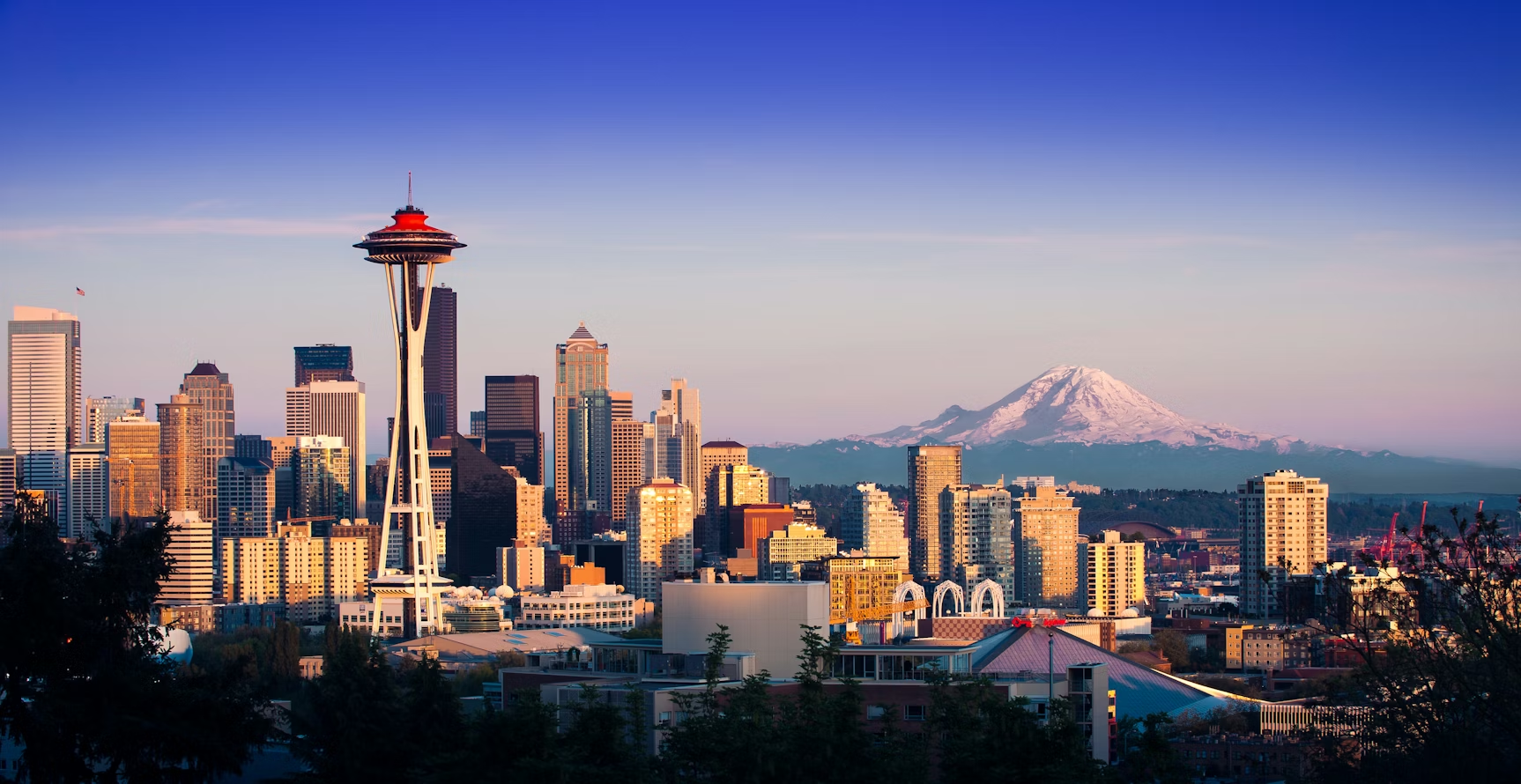
Seattle's water starts as snow collecting in the Cascades. When it melts, it flows through the Cedar River Watershed — a 90,000-acre protected reserve east of North Bend — and the South Fork Tolt River Watershed. These are two of the most pristine surface water sources used by any major American city.
Seattle Public Utilities (SPU) serves the city from two treatment plants: the Cedar Water Treatment Facility (up to 180 million gallons per day) and the Tolt Water Treatment Facility. The Cedar supply is so clean it meets the rare standard of not requiring filtration — one of only four facilities in the country that qualifies. It does receive ozonation, UV disinfection, and chloramine treatment. The Tolt supply goes through full treatment including conventional filtration.
Over 80% of Seattle residents receive Cedar River water. If you live south of Green Lake, your water is almost certainly from Cedar. Areas north of Green Lake — Broadview, Bitter Lake, Crown Hill, Northgate, Haller Lake, Pinehurst — typically receive Tolt water.
PFAS: Effectively Non-Detect in Seattle's Main Supply
SPU has tested its Cedar and Tolt sources for PFAS in 2015, 2018, 2022, and as required under federal regulations in 2023. Test results in 2015 showed no detection of PFAS, and 2018 tests using a more sensitive method still showed no detection in Seattle's surface water supplies.
The 2023 UCMR 5 round — the most comprehensive federal PFAS testing to date — continued to show no detections in SPU's two main watershed sources.
The one nuance: SPU also has backup wells available for emergencies, not used since 2015. Two of three wells showed no detection; one well (Blvd Park) showed trace PFAS at a maximum of 5 parts per trillion — just above the new 4 ppt EPA MCL for PFOA/PFOS. These wells are emergency-only and not currently in service, but SPU monitors them.
For SPU's main water supply, PFAS is as close to a non-issue as exists in any American city. This is largely a function of the protected watershed status — no industrial, agricultural, or military PFAS sources are present in the Cedar or Tolt watersheds.
Lead: No Utility-Side Lead Lines, But Interior Plumbing Matters
There are no known lead service lines in Seattle's water distribution system, though there are a small number of homes and buildings that may have short lead connections. SPU treats water to minimize the tendency for lead to enter through corrosion, and reports it has been very successful at this.
This is an important distinction from cities like Philadelphia, Chicago, or New Orleans: Seattle doesn't have the lead service line problem because its distribution infrastructure is newer. The city also maintains water at a higher pH to reduce corrosion in home plumbing.
Where lead risk remains: Pre-1986 homes in older Seattle neighborhoods — Capitol Hill, First Hill, Central District, Beacon Hill, Rainier Valley, Wallingford — may have lead solder at fixture connections or lead in older interior plumbing. This is true of any city with older housing stock, and Seattle has it in its pre-WWII-era neighborhoods.
SPU offers free lead testing for customers enrolled in the Utility Discount Program (call SPU's Water Quality Lab at 206-615-0827). If you have an older home and have never tested, a tap water test for lead is inexpensive insurance. Lead from old plumbing components is most concentrated in water that has been sitting overnight — flushing for 30 seconds to 2 minutes before drawing drinking water is an easy precaution.
Chloramine Disinfection and What It Means
Seattle uses chloramine (chlorine + ammonia) as its secondary disinfectant rather than free chlorine. Chloramine is more stable in the distribution system and produces lower levels of regulated TTHMs and HAA5 compared to free chlorine.
The trade-offs:
- Chloramine produces different disinfection byproducts — mainly nitrosamines (including NDMA) and iodoacetic acids — that are not regulated but are of growing research interest
- Standard activated carbon pitcher filters (Brita Standard, PUR basic) handle free chlorine well but have limited effectiveness against chloramine. Catalytic carbon (used in Clearly Filtered and Frizzlife SK99) is specifically designed for chloramine removal
- Chloramine is harmful to fish at any concentration — aquarium owners must use a dechlorinator specifically rated for chloramine, not just chlorine
- Dialysis patients: chloramine must be removed from water used in dialysis — medical facilities handle this, but home dialysis patients should ensure their system is designed for chloramine removal
Seattle's DBP levels (TTHMs and HAA5) are among the lowest in the country, which is one real benefit of the pristine source water combined with chloramine disinfection. For most Seattle residents, DBPs are not a meaningful concern.
Seasonal Taste Variation
Seattle residents on the Cedar supply occasionally notice an earthy or musty taste during heavy rain periods from fall through spring. This is not a safety issue — it reflects natural organic compounds (tannins, soil humic acids) entering the Cedar watershed during rain events. SPU adjusts its ozonation and filtration in response. Carbon filtration at the tap effectively removes these taste and odor compounds.
Summer water from the Cedar can sometimes have a slightly different taste as Lake Youngs (the Cedar reservoir) warms. Again, aesthetic only.
The Suburban Systems: Where Regional PFAS Problems Live
Seattle's own supply is excellent. Several suburban systems in the region have significant PFAS contamination that doesn't affect Seattle city water but matters for residents in those areas.
Sammamish Plateau Water District: The district has identified PFAS in three of its wells, linked to firefighting foam formerly used at nearby sites during lawful fire training activities. A $19.5 million Well 9 PFAS treatment plant is under construction in Issaquah. This is a required compliance project. Sammamish Plateau customers should check the district's current status on treatment plant completion.
Joint Base Lewis-McChord (JBLM) plume (Tacoma/Pierce County): One of the largest military PFAS plumes in the Pacific Northwest. JBLM's AFFF use history has contaminated groundwater in parts of Pierce County. Communities drawing from affected groundwater wells in this area — particularly south of Tacoma — face ongoing PFAS exposure concerns separate from SPU.
Covington Water District and other King County systems: EWG data shows trace lead and PFAS levels in some King County suburban systems that fluctuate seasonally with temperature and pH shifts. Residents on smaller King County systems outside SPU's direct service territory should check their own utility's UCMR 5 results.
Washington State enacted legislation in 2021 requiring all public water systems to test for PFAS by December 2025 — one of the earlier state-level PFAS monitoring mandates in the country. Results from this statewide testing round are informing which suburban systems need treatment.
Hardness: Seattle Has Remarkably Soft Water
Seattle's water is among the softest of any major US city — hardness is typically around 1–2 GPG (grains per gallon). This is a significant benefit: no scale buildup on appliances, no need for water softeners, excellent soap lathering.
The flip side: very soft water is more corrosive than moderately hard water, which is why corrosion control (pH management, orthophosphate dosing) matters more in Seattle than in Phoenix or Las Vegas. SPU manages this carefully.
If you're moving from a hard-water city (Denver, Phoenix, Las Vegas, Chicago) to Seattle, the very different water behavior — especially for coffee, tea, and appliances — takes adjustment.
Filter Recommendations for Seattle Residents
For most Seattle city residents: The source water is so clean that filtration is genuinely optional from a safety standpoint. The main reasons to filter are: chloramine taste and odor, seasonal taste variation during rain events, pre-1986 home lead concern, or personal preference.
Minimum for chloramine/taste:
- Clearly Filtered Pitcher (~$90) — catalytic carbon handles chloramine; also certified for lead, PFAS, DBPs, and 360+ contaminants; best all-round pitcher for Seattle
- Frizzlife SK99 Under-Sink (~$90) — catalytic carbon block; NSF 42+53; excellent chloramine and lead reduction at under-sink
If you're in a pre-1986 Seattle home (Capitol Hill, Central District, Wallingford, Beacon Hill): Any NSF 53 certified filter addresses lead risk. The Frizzlife SK99 or Clearly Filtered are the right choices.
If you're in Sammamish Plateau or another suburban system with known PFAS:
- APEC ROES-50 (~$215) — under-sink RO; removes PFAS, lead, and all regulated contaminants
- Bluevua RO100ROPOT-LITE Countertop RO (~$299) — countertop RO; no installation; good for renters in affected areas
→ Check your Seattle-area ZIP code at PureCity
Resources
- Seattle Public Utilities water quality: seattle.gov/utilities/your-services/water/water-quality
- PFAS testing data: seattle.gov/utilities/your-services/water/water-quality/quality-concerns/pfas
- Washington State DOH drinking water: doh.wa.gov/community-and-environment/drinking-water
- SPU free lead testing (Utility Discount Program participants): 206-615-0827
Related Articles
- PFAS in Drinking Water: What It Is, Where It's Found, and How to Filter It
- Chloramine in Drinking Water: What Standard Carbon Filters Miss
- Lead in Drinking Water: What Every Homeowner and Renter Needs to Know
- Best Water Filter for Renters: No-Install Options That Actually Work
Sources: Seattle Public Utilities: PFAS · SPU: Water Quality Monitoring Results · SPU: Water Quality Lab Testing · North City Water District: Annual Water Quality Report 2024 · Sammamish Plateau Water District: 2025 Drinking Water Quality Report · EWG Tap Water Database: Seattle