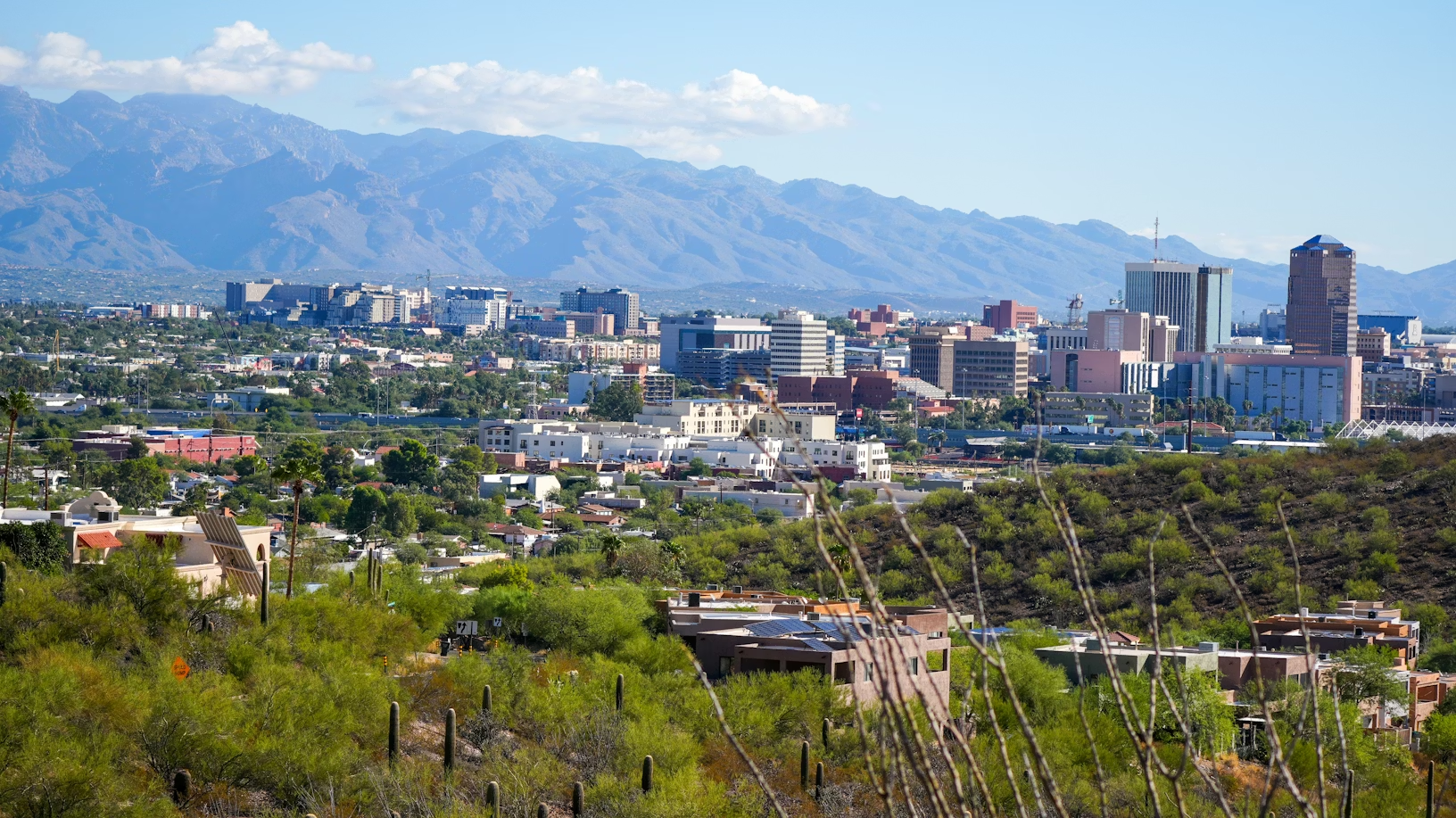
Tucson's water quality situation in 2026 is one of the most actively evolving in the American Southwest. The city has removed 22 wells from service due to PFAS contamination, filed a federal lawsuit against the Department of Defense in February 2026, and is simultaneously constructing multiple treatment facilities to address contamination that traces back to decades of military firefighting foam use.
Current Tucson tap water meets EPA PFAS standards. But understanding how that compliance is maintained — and where the ongoing risks lie — matters for residents.
Two Sources of Contamination, One City
Tucson's PFAS problem has two distinct origins that converge on the same groundwater aquifer:
Davis-Monthan Air Force Base. Located in central Tucson, D-M used aqueous film-forming foam (AFFF) containing PFAS for firefighting training and operations from 1971 through approximately 2017 — 46 years. The base has acknowledged that foam was discharged into soils at runway locations and diluted into sewers from hangar locations. PFAS at concentrations well above EPA health advisory levels have been confirmed in groundwater directly north of the base, threatening Tucson's Central Wellfield.
Tucson International Airport Area Superfund Site. On Tucson's southwest side, a separate PFAS plume originates from historical foam use at the airport. Early sampling at supply wells near the airport found PFAS at levels ranging from 97 to over 3,000 parts per trillion — compared to EPA's 4 ppt standard. This site also has contamination from trichloroethylene (TCE), a legacy industrial solvent from Hughes Aircraft operations dating to the 1950s.
The Central Wellfield served by these groundwater sources is critical: it is the primary drinking water supply for over 65,000 people and the sole alternate supply for 600,000.
What Tucson Water Is Doing
Tucson Water has been unusually proactive about both monitoring and remediation:
22 wells removed from service. In response to PFAS levels exceeding EPA's new MCLs, Tucson Water has taken 22 wells offline rather than blend contaminated water into the distribution system. Eight additional wells are on emergency-use-only status.
The Tucson Airport Remediation Project (TARP). This existing facility treats PFAS-contaminated groundwater from the airport area. Construction of an advanced oxidation pretreatment system at TARP began in January 2025 and is expected to complete by August 2026 — adding a more powerful treatment stage to address PFAS compounds that are harder to remove.
The Central Tucson PFAS Project. A treatment system at a City of Tucson supply well began operating as a demonstration project in December 2021, removing PFAS from groundwater before it reaches the Central Wellfield. A new funding agreement between the state and US Air Force for this project is being renegotiated after a funding lapse temporarily halted operations in early 2025.
The Northwest Wellhead Treatment Facility. Under active development (well drilling and site preparation) following city council approval in 2023. When complete, it will return three Tucson Water wells to production with advanced PFAS treatment, recovering water supply capacity lost when wells were taken offline.
The February 2026 Lawsuit
On February 9, 2026, the City of Tucson filed a 14-page federal lawsuit against the Department of Defense under the Federal Tort Claims Act, arguing that Davis-Monthan AFB "has taken inadequate action to stop PFAS from contaminating Tucson's water supply." The suit seeks recovery of past, present, and future damages, including costs to install and operate treatment systems.
This follows a pattern seen in Dayton, Ohio, and other cities near Air Force installations: the contamination is acknowledged, some federal funding flows for remediation, but cities argue the reimbursement is insufficient and the pace is too slow. The Tucson lawsuit is active as of this writing.
Is Tucson Tap Water Currently Safe?
Tucson Water's distributed tap water currently meets all EPA MCLs for PFAS. The city's aggressive strategy of removing contaminated wells from service rather than blending them into supply has maintained compliance. The compliance deadline for the new 4 ppt PFOA/PFOS standard is 2029–2031.
That compliance is real — but it depends on ongoing management of well operations, blending, and treatment. It is not a statement that PFAS levels in the underlying aquifer are declining; remediation of the aquifer itself is a longer-term project measured in decades.
The more meaningful question for individual residents is: do you want to add a layer of in-home filtration as a hedge against operational changes in the supply blend? For households with pregnant women, infants, or young children, the answer is likely yes — the cost of a filter is low relative to the precautionary value.
The Desert Water Context: More Than Just PFAS
Tucson shares some water quality characteristics with Phoenix given the shared Arizona desert geology:
Hard water. Tucson water is moderately to very hard — typically 10–15 GPG depending on source blend. This causes scale buildup on fixtures, reduces appliance efficiency, and affects soap lathering. A water softener addresses this; RO filtration at the kitchen tap also removes hardness minerals from drinking water.
Arsenic. Like Phoenix, Arizona's geology means low levels of naturally occurring arsenic appear in some of Tucson's groundwater sources. With 22 wells offline, the current supply blend relies more heavily on treated surface water (including Colorado River water via the Central Arizona Project), which tends to have lower arsenic. Worth monitoring in updated CCRs.
Disinfection byproducts. Tucson uses chloramine for disinfection. Standard carbon filters are less effective against chloramine; catalytic carbon or reverse osmosis is more appropriate.
→ Enter your Tucson ZIP at PureCity to see current contaminant data for your service area.
What Filter Makes Sense in Tucson
Given PFAS contamination in the underlying aquifer and the complexity of Tucson's water supply management, an in-home filter certified for PFAS at your kitchen tap is a practical precaution.
Reverse osmosis (best comprehensive option):
- APEC ROES-50 Under-Sink RO (~$215) — removes PFAS, arsenic, hardness, DBPs, and nearly everything else; NSF 58 certified
- Waterdrop G3P600 Tankless RO (~$400) — compact, fast flow, no tank; good for smaller kitchens
- Bluevua RO100ROPOT-LITE Countertop RO (~$299) — no installation required; ideal for renters
Pitcher filter (for renters or budget-constrained):
- Clearly Filtered Pitcher (~$90) — independently certified to remove PFAS, arsenic reduction, chloramine, and 360+ contaminants. The best non-RO pitcher for Tucson's specific water profile.
What not to use: Standard Brita pitchers, basic faucet mounts, and most refrigerator filters are not certified for PFAS removal. They address chlorine taste and odor but not the contaminants of primary concern in Tucson.
A Note on the Airport-Area Neighborhoods
Residents in south Tucson — roughly south of 22nd Street, north of Los Reales Road, between I-19 and Del Moral — have the longest history of water contamination concerns, dating back to TCE contamination from Hughes Aircraft in the 1950s. This area received $130M+ in legal settlements by 2006 and continues to receive cancer screening services through El Rio Pueblo Health Center.
The ongoing PFAS contamination from the Tucson International Airport Area Superfund site represents a new chapter in what has been a decades-long water quality story for these neighborhoods. Residents in this area have particular reason to use point-of-use filtration and stay engaged with the remediation updates from Tucson Water and ADEQ.
Staying Updated
Tucson Water and the Arizona Department of Environmental Quality (ADEQ) both publish detailed PFAS monitoring data and remediation updates:
- Tucson Water quality data: tucsonaz.gov/government/water
- ADEQ Tucson PFAS page: azdeq.gov/Tucson_PFAS
- Davis-Monthan site status: azdeq.gov/DOD/DavisMonthan
Related Articles
- PFAS in Drinking Water: What It Is, Where It's Found, and How to Filter It
- Colorado Springs Water Quality 2026: PFAS from Military Bases and What Residents Can Do
- Phoenix, Arizona Water Quality 2026: Arsenic, Hard Water, and What Residents Should Filter
Sources: City of Tucson Lawsuit Against DoD, Tucson Sentinel, Feb 2026 · ADEQ Tucson PFAS Resources · AZ Luminaria: New Facility, More Wells Offline, June 2025 · AZ Luminaria: TCE to PFAS, June 2025 · ADEQ Davis-Monthan AFB Site · EPA PFAS in Drinking Water · NSF Certified Products Database